5 Essential Features for your Home Care Software
With an ever increasing population of elderly and disabled people, the demand for quality home care is rising. Home care agencies provide a vital service in this modern healthcare landscape, and your care team have enough on their plates without worrying about keeping on top of mounting paperwork.
Using tailored and innovative home care software can make the work of your busy carers easier, by reducing the admin burden and saving valuable time and resources.
But with the plethora of domiciliary care software solutions to choose from - what are the 5 essential features you should look for?
1. Comprehensive Person Centred Care:
Person-centred care is about providing personalised and tailored homecare that meets the patient’s needs and puts them at the heart of what you do. The right software should cover all aspects of managing your home care business and mirror the way your care teams like to work. Following the day-to-day processes carers prefer but using modern technology and a dedicated solution to improve efficiency, minimise errors, keep accurate records and monitor patients in real time.
The key features to look for in a comprehensive system are:
- a. Personalised care planning tailored to each client. Digital care plans can easily be updated in real time and signed by a dedicated carer.
- b. Monitoring and tracking tools as standard for reporting on client progress and health status.
- c. Client and family access: it’s important to involve clients and their families in the care process, and smartphone apps can be used to view care plans and medication records.
- d. Medication Administration Records (electronic MAR charts) can be kept up to date more accurately as soon as medication is given.
The best home care software should offer an all-in-one solution that combines common tasks like staff scheduling, care planning, maintaining MAR charts, real-time patient monitoring, invoicing and payroll. As a result, clients will be happier as their needs are being met, families know their loved ones are being looked after and communication will improve between care providers, clients and families.
2. Customer Support & Training:
Things will inevitably go wrong; it is tech, after all. Solid and reliable customer service and ongoing training for home care software is crucial for domiciliary care providers. Ask yourself: does the home care solution provider offer 24/7 support? Are you able to contact them in different ways - via phone, email or online chat? The software itself should be able to automatically assist your carers to troubleshoot and solve common issues.
Even if the home care software you choose is easy to use, initial training should be provided for new staff and ongoing refresher training for existing staff. This is an important feature for any homecare software as regular updates are often needed, due to new features being added or changes to regulations. Reliable ongoing support and training means a reduced learning curve for your care team, increasing efficiency and improving user confidence and competence.
3. Compliance with CQC Standards:
Make sure your chosen homecare software complies with the CQC’s fundamental standards of quality and safety. For example, a client should expect care and treatment tailored to their needs, provide their consent before any care or treatment is given, and not be given unsafe care or treatment. Software that allows your care team to easily meet CQC standards and can be easily updated when regulations change is vital.
Your carers handle sensitive patient information all the time and this data needs to be protected under strict GDPR regulations. A digital software system can limit access to specific carers and family and friends of the patient and is more secure than keeping paper records which could get mislaid or lost. Meeting industry standards minimises the legal and financial risks and maintains quality assurance and safety in homecare delivery.
4. Flexibility and Scalability:
Not all home care agencies need the same solution and a one-size-fits-all approach will not work. Software needs to cater for your home care agency and its specific clients. Your home care software provider should be working with you to continuously develop and customise features that match your internal processes and how your care team like to work.
Flexibility is key and the software needs to be able to grow with you, as you take on more clients with diverse and changing needs. A flexible and scalable solution will not only prepare your home care agency for the future, but there’s the overall benefit of cost-effectiveness in the longer term.
5. User-Friendliness:
Choose software that is easy to use and simple to understand. The last thing you want is your care team struggling to navigate a complicated dashboard. An intuitive system will have a massive impact on the carer’s user experience. Your care team are more likely to adopt and start using a system that is user friendly and quick to pick up. The layout should be clear and easy to navigate, so that information can be found quickly when needed. An additional consideration is including accessibility features for users with different needs. This feature will significantly reduce training time and increase the likelihood of the system being used by your carers, resulting in improved efficiency and reduced errors when entering data.
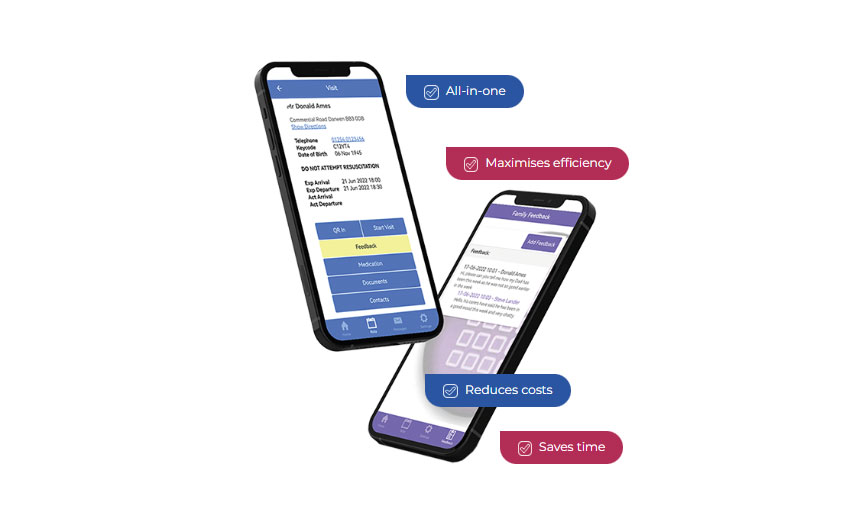
If you’re considering starting a new homecare business in 2024 or you run an existing home care agency, we urge you to consider these five essential features to help you choose the right homecare software for your business.
As a leading provider of home care software for over 20 years, Tagtronics Care have supported hundreds of home care agencies to successfully integrate user friendly, person centred care software into their day to day work.
For a demo of our comprehensive person-centred home care software, call 01254 819205 or email howcanwehelp@tagtronics.co.uk




 Innovative
  Trusted by hundreds of homecare companies to help the homecare frontline, to care better.