The Relationship between Home Care Software and Hospital Readmissions
Hospital readmissions refer to instances where a patient is admitted to a hospital within a specific period (usually 30 days) after being discharged from an earlier hospital stay.
In the UK, the emergency readmission rate within 30 days of discharge was around 14% (2022/23). Rates tend to be much higher among older adults, e.g. patients aged 75 and over had a readmission rate of 18%. Patients with chronic conditions like heart failure and COPD often have higher readmission rates exceeding 20%.
In this blog, we explore the relationship between home care software and hospital readmissions and discuss its potential to reduce the number of patients being readmitted to hospital unnecessarily.
Reasons For Hospital Readmissions
Hospital readmissions can occur for many reasons, depending on the patient’s condition and the quality of care they received. Some common reasons include:
- Complications from initial treatment: Patients could experience complications or side effects from their initial treatment or surgery that need further medical attention.
- Infections: Post-surgical infections can lead to readmission if they’re not managed properly.
- Chronic disease management: Conditions like heart failure, diabetes and chronic obstructive pulmonary disease (COPD) often require ongoing management.
- Medication issues: Problems with medication, such as side effects, incorrect dosages, or not sticking to prescribed treatment can lead to readmissions.
- Premature discharge: If a patient is discharged before they’re fully recovered or before a comprehensive care plan is in place, they could return to hospital.
- Lack of follow-up care: Insufficient follow-up care or support after discharge can result in complications that lead to readmission.
- Social factors: Inadequate home care, lack of social support, or difficulty accessing outpatient services can contribute to readmissions.
Role of Home Care Agencies in Post-Hospital Care
Homecare agencies play a vital role in easing the transition for patients returning home after a hospital visit. However, there’s an urgent need to address the reasons why a care client gets readmitted to hospital 30 days after being discharged.
The Homecare Association, the UK national membership body for homecare providers, recently published a report: “Expecting the Unexpected” revealing widespread problems with hospital discharge.
Significantly, 63% of homecare providers said people were being discharged from hospital too soon, leading to readmission. 55% reported hospital discharge paperwork does not reflect knowledge of the person being supported, including their needs and views.
Despite guidance, funding and a national taskforce, many integrated care systems are not getting the basics right, putting the safety and wellbeing of people leaving hospital at risk.
Home care agencies face significant challenges with coordination and communication issues, monitoring patient conditions effectively, managing care plans and medications, and staying on top of caregiver training.
The report calls for 35 change recommendations, including:
- NHS leaders to follow and audit existing discharge guidance, and act urgently on findings before winter 2024/25.
- The government to provide sufficient funding to councils and the NHS to cover homecare costs.
- The Department of Health and Social Care to deliver its planned social care workforce reforms, backed by £8-£18 billion annual investment.

How Home Care Software Can Help
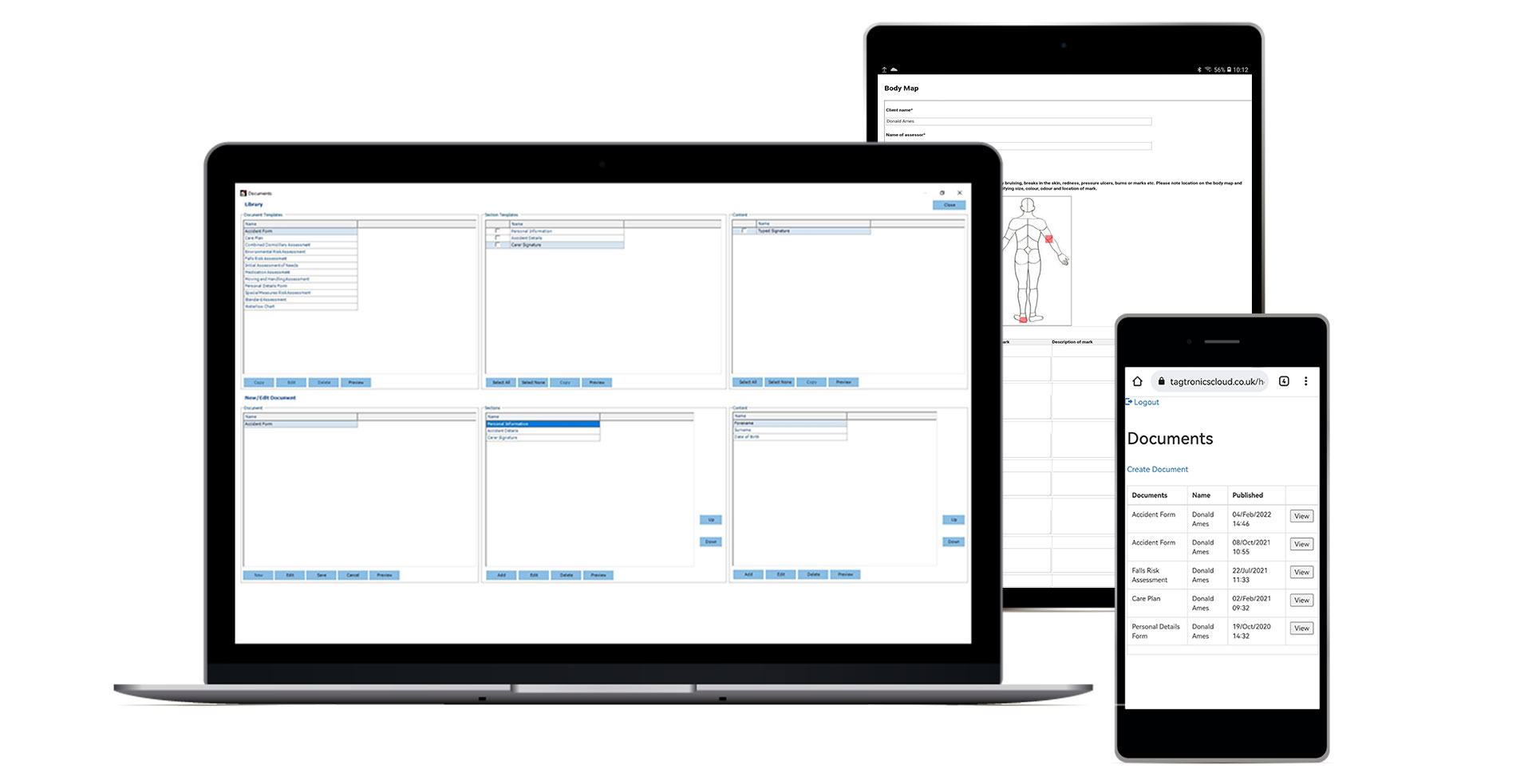
Homecare (or domiciliary care) software is designed to mirror the way your care teams like to work, saving them at least 20 minutes admin time per day and enhancing the quality of care for your clients.
Key features of our all-in-one software include managing personalised care plans, recording and monitoring patient information in real time, and improving communication with tools such as the family and friends mobile app.
Home care software has an important role to play in reducing hospital readmissions, and could be used in the following ways:
1. Improving Communication and Coordination
- Streamlining communication across the board between hospitals, caregivers, friends and families.
- Real-time updates and access to patient information when needed, as Dave from Clarendon Home Care told us: “A digital system gives us the ability to respond in much shorter timeframes – instead of being a month behind, you can see things in real-time. If there is an issue, we can pick this up immediately and talk to carers or service user about any problems.”
- Collaboration with healthcare professionals for comprehensive person-centred care.
2. Enhancing Monitoring and Reporting
- Analysing data recorded by the software to monitor patient health and predict potential issues before they arise.
- Keeping track of prescribed medication schedules and monitoring patient’s vital signs.
- Being able to detect early any changes in a care clients condition.
3. Customising Care Plans
- Personalised care plans can be created based on an individual patient’s needs.
- Care plans can easily be adapted in real-time as patient conditions change.
- Continuity of care after a patient is discharged from hospital is maintained with accurate record-keeping. Simon from All About You Care Services has found this benefit invaluable. He says: “Our carers can now easily scan in and out of visits, access care plans and visit notes, ensuring a seamless and quality care service. This was really important to meet our local authority’s KPIs.”
4. Training and Supporting Caregivers
- Up-to-date resources and training modules for home carers can be provided through the software.
- Easier to maintain consistent and quality care as the whole team will be trained on the same software.
- Supporting caregivers in managing complex cases.
The widespread problems with hospital discharge highlighted by the Homecare Association’s report emphasise the important need to reduce unnecessary hospital readmissions.
Home care software has an important role to play in achieving this goal. Therefore, we’d encourage home care agencies who are still on the fence to explore and invest in home care software, as the long-term benefits for patients, caregivers, and the healthcare system speak for themselves.
As a leading provider of domiciliary care software for almost 25 years, Tagtronics has supported hundreds of home care agencies to explore and integrate new technology into their businesses.
To find out how our home care software can help reduce hospital readmissions, why not give one of our friendly team a call on 01254 819205 or email us on howcanwehelp@tagtronics.co.uk?




 Innovative
  Trusted by hundreds of homecare companies to help the homecare frontline, to care better.